
Whoa!
I use Solana explorers every day to track transactions. They show mempool activity, token flows, and wallet timing that matter. Initially I thought all explorers were roughly the same, but digging into event logs and trace graphs changed my mind and taught me details I hadn’t expected. The differences are subtle yet they affect how you interpret on-chain behavior across fast-moving markets and low-fee chains like Solana.
Really?
I built small tooling that queries transaction statuses for projects I watch. The token tracker views are particularly telling during airdrop or mint windows. On one hand the raw tx rate paints a picture, though actually the decoded instructions and historical token transfers reveal front-running, retries, and subtle fee strategies that the naive rate misses. That deeper view is what separates noise from patterns when you have limited time to act.
Wow!
Solana transactions are compact but packed with instruction sets and inner instructions. A single tx can move tokens, call a program, and alter account data all at once. Something felt off about the way many explorers showed inner instruction nesting. Actually, wait—let me rephrase that: some viewers collapse those inner events, which is faster to load but it hides how a multi-step swap, a fee transfer, and a temporary account change relate across logs.
Hmm…
Transaction tracing matters when you audit token flows or build analytics. Token trackers should show historical balance deltas and not just transfers. Okay, so check this out—when a wallet executes a liquidity move, naive explorers sometimes show only the SPL transfers while missing the approximate market impact and slippage encoded in program logs. I’m biased, but that part bugs me because it creates blind spots for traders and researchers who rely on surface metrics.
Whoa!
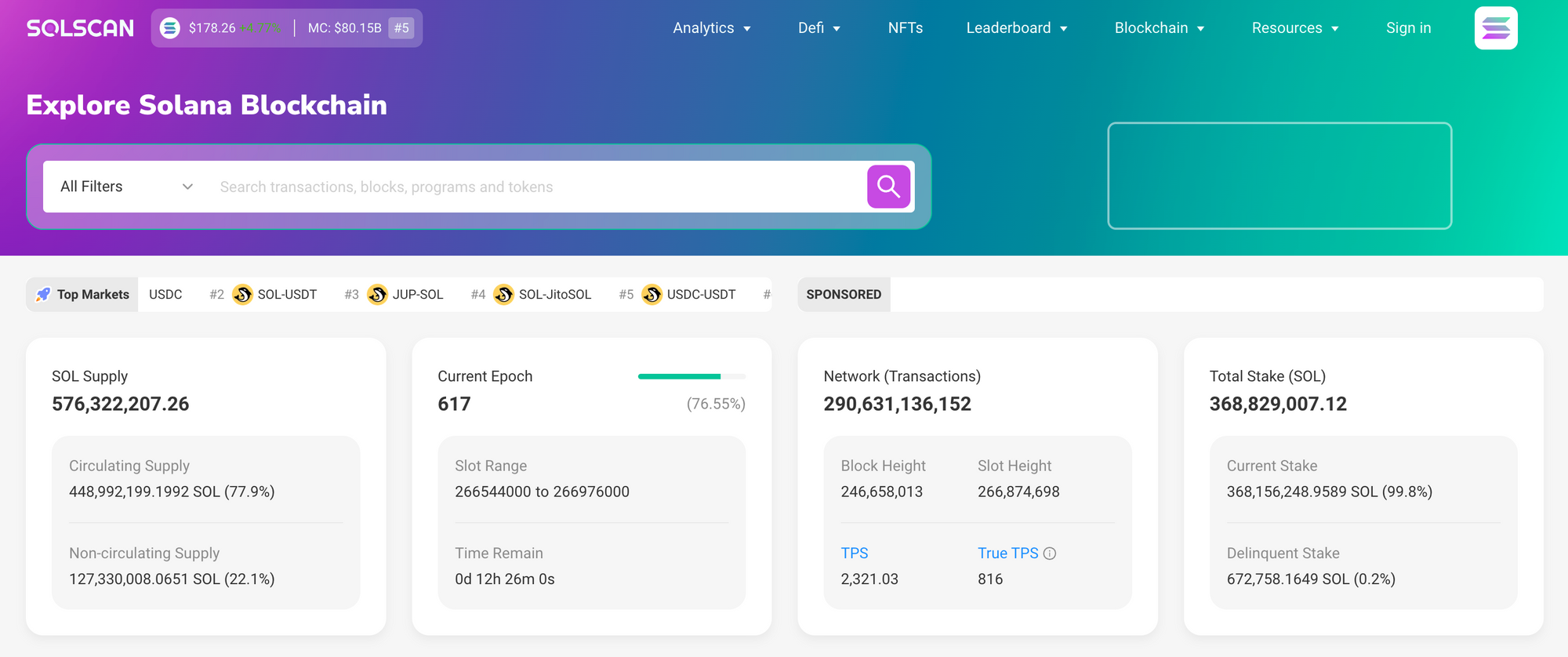
Solscan has been one of my go-to interfaces for digging deeper. Their decoded instruction views and token tracker tabs save me time when investigating mints. If you haven’t tried the solscan explorer you’ll notice it surfaces inner instruction details and historic token flows alongside charts and balance snapshots, which is handy when you’re correlating suspicious behavior across wallets and smart contracts. On the other hand, no tool is perfect and sometimes the UX feels cluttered when I’m under time pressure.
Really?
You can combine on-chain data and off-chain context to build better alerts. Alerts that consider instruction timing, token mint events, and stake state reduce false positives. Initially I thought proxies and cluster quirks were rare, but then I watched a cluster restart confuse several analytics pipelines and force manual reconciliation, which taught me to build fallback fetches and idempotent ingestion. This is why repeatable metrics and raw log access matter.
Wow!
Token trackers let you pivot from a single holder to entire cohorts quickly. You can spot macro moves when many wallets show coordinated token outflows in the same block range. On one hand that’s likely institutional rebalancing, though actually the pattern sometimes masks automated farm harvests that consolidate funds through a relay wallet before on-chain swaps occur, which requires cross-checking approvals and nonce patterns. I’m not 100% sure about every interpretation, but cross-referencing with trade pools helps.
Hmm…
Privacy and transparency dance together on Solana in messy ways. Some users expect full traceability, while others rely on privacy-preserving patterns. So when building analytics you need to weigh actionable signals against noisy attribution, deciding whether to alert based on raw volume thresholds or on reconstructed intent derived from multi-step instruction analysis that combines token history, program IDs, and timestamp clustering. That’s a big design tradeoff and it’s easy to get it wrong.
Why I keep going back to detailed explorers
Okay, so check this out—
If you want to dig into transactions and token histories fast, use tools that decode inner instructions and surface token balance deltas alongside raw logs. I often open solscan explorer for decoded logs and token tracker views. My instinct said a single dashboard would be enough, though I kept adding modules because data nuances popped up. Somethin’ about that iterative tweak process is satisfying.
Wow!
Real-time analytics is an arms race between speed and interpretability. You want low latency but also explainable signals so your team trusts alerts. On the other hand, building that trust requires transparency about how signals are derived and honest metrics about false positive rates, which many dashboards gloss over to keep the interface clean, and that tradeoff frustrates me. I’m not 100% done with this topic and I won’t pretend there’s one right way.
FAQ
How do I trace a suspicious token transfer?
Start with the transaction and check inner instruction decoding first. Then follow SPL token transfers backward and forward across adjacent blocks to see fund movement. Cross-check program IDs and watch for temporary accounts used as relays. If you can, export logs and replay them in a local parser for deterministic tracing—it’s slower but more reliable.
What’s the difference between token trackers on explorers?
Some track only direct transfers while others reconstruct balance deltas from instructions and account snapshots. The latter gives a fuller picture but needs more compute and storage. I’m biased toward the richer view because it surfaces multi-step strategies, though it does mean the UI can feel busier. Decide based on whether you need quick alerts or forensic accuracy.